Week 1 Short Session, Serious Choices
Governor Bob Ferguson opened the 60-day session with a State of the State grounded in affordability, accountability, and fairness while being candid about the fiscal reality facing Washington. This short session is focused on supplemental budgets, which adjust last year’s biennial budget to reflect updated revenue forecasts, caseload changes, and urgent needs.
The challenge is significant with a $2.3 billion dollar shortfall. The governor has proposed using approximately $1 billion from the Rainy Day Fund, alongside nearly $800 million in agency-level cuts and $569 million from Climate Commitment Act, to help close the gap. As always, FAN will advocate for a moral budget and address Washington’s upside-down tax system to maintain essential public services like healthcare, food security, and housing.
This week, FAN showed up repeatedly to speak to the values at stake behind the bills:
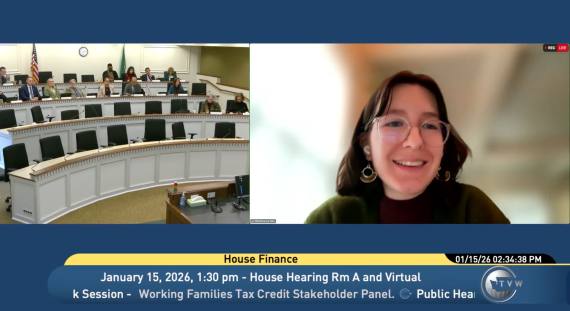
- SB 5885 / HB 1859 — Faith lands for affordable housing: These bills expand the ability of religious organizations to develop affordable housing on underutilized land. They connect faith-rooted stewardship with real solutions to the housing crisis. Deep appreciation to Brianna Dilts (Spokane), FAN organizer, whose testimony on HB 1859 powerfully reflected the multifaith statewide grassroots leadership driving this effort from Spokane to Tacoma. HB 1859/SB 5885 enables an increased density bonus and sales tax exemption for any housing development located on property owned or controlled by a religious organization where 50%+ of units serve low-income households.
- SB 5855 & HB 2173 “No masks” concerning facial coverings for law enforcement. FAN testified in both Senate and House hearings on legislation requiring law enforcement officers to be identifiable while performing public duties. These bills are about transparency, public trust, and preventing abuse of authority especially for immigrant communities and communities of color, where anonymity paired with enforcement power creates fear and confusion.
- HB 2281 Tribal Traditional Cultural Places & Practices Protection strengthens Washington’s government-to-government relationship with tribes by expanding and formalizing protections for tribal traditional cultural places and practices.
- HB 2105 Immigrant Worker Protection Act requires employers to notify workers when federal officials request employment eligibility information and prohibits employers from voluntarily granting immigration agents access to non-public areas of a workplace without a warrant. This bill helps ensure dignity, stability, and due process for immigrant workers - protecting communities from fear and disruption while upholding the rule of law.
SB 5794 Law Enforcement Leaders Standards
FAN also testified on SB 5974, legislation that modernizes standards for sheriffs and senior law enforcement leadership. The bill is grounded in a straightforward principle: those who lead must be held to the same — or higher — standards as those they command. While deputies are required to follow strict professional, ethical, and constitutional rules, accountability for top leadership has historically been inconsistent. SB 5974 closes that gap and also clarifies expectations around the use of volunteers and reserve personnel, ensuring that anyone operating under a sheriff’s authority is subject to clear standards, oversight, and lawful conduct. Importantly, the bill’s sponsor, Sen. John Lovick, brings more than 40 years of experience as a former sheriff and Washington State Patrol officer — reinforcing that this legislation is about professionalism and public trust, not politics.
This week offered a stark illustration of why SB 5974 alongside HB 2173 are necessary now, not later.
Pierce County Sheriff Keith Swank delivered testimony before the Legislature that many experienced as outrageous and deeply unsettling. He questioned the authority of lawmakers, suggested mass confrontation, and crossed the line from policy disagreement into intimidation. On the very same day, he amplified inflammatory social media rhetoric tied to violence in Minneapolis, hoping the same thing happens in Seattle or Tacoma and asserting that if the no-masks bill passes, he would encourage officers to wear masks anyway.
The seriousness of this conduct was underscored when the Washington Association of Sheriffs and Police Chiefs (WASPC) publicly rebuked Swank and announced it was considering expelling him from the organization — an extraordinary step that speaks volumes about how far outside professional norms his behavior has fallen.
Taken together, these words and actions were not merely inappropriate, they were a real-time demonstration of what happens when leadership operates without guardrails. When a law enforcement leader behaves in ways their own deputies would likely be disciplined for, public trust erodes and democratic institutions are put at risk. This is precisely why SB 5974’s leadership accountability provisions and HB 2173’s No Masks transparency requirements must pass this year. These bills affirm a fundamental democratic truth: power is never absolute — it carries responsibility, demands accountability, and requires transparency. |