This week brought the release of both the House and Senate budget proposals, major public hearings on progressive revenue, and important policy bills advancing out of committee.
The next 13 days will determine what makes it across the finish line before adjournment on March 12 (Sine Die). From here forward, floor votes and budget negotiations dominate the agenda.
With two weeks remaining, deadlines are critical:
- March 2 – Fiscal Committee Cutoff
Bills with budget impacts must pass the opposite house fiscal committees.
- March 6 – Opposite House Cutoff
Bills must pass the other chamber.
- March 12 – Sine Die
Final day of session. All work must be complete.
Budget Proposals Released
Both the House and Senate unveiled their proposed 2026 operating and capital budgets this week, laying out competing plans to close the state’s budget shortfall while preserving essential services. The operating budget totals about $79 billion, relies partly on Rainy Day reserve funds, and includes targeted revenue options, with deeper progressive revenue like the Millionaires Tax not assumed until 2029.
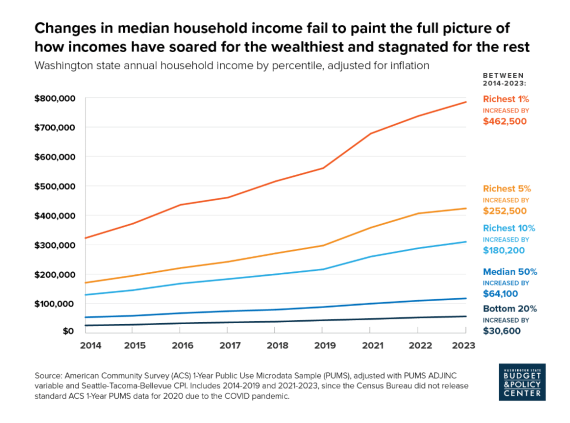
Washington faces a serious affordability crisis. Rising costs in childcare, housing, health care, and education continue to strain families. Meanwhile, our upside-down tax code asks the lowest-income households to pay far more of their earnings in taxes than the wealthiest residents.
The big question facing lawmakers: Will we continue to balance budgets through cuts that harm children, seniors, immigrants, and working families — or through progressive revenue solutions that rebalance our tax code?
That debate came sharply into focus this week during the hearing on ESSB 6346 — the Millionaires Tax.
This week the House Finance Committee held a two-hour public hearing dedicated solely to this bill, reflecting the magnitude of the proposal and public interest. Tens of thousands of Washingtonians signed in PRO and CON.
Pastor Bob Feeney from Spokane testified in support, grounding the bill in moral responsibility and shared prosperity.
Why it matters:
- Applies a 9.9% tax only on annual income above $1 million
- Impacts approximately 20,000 households — less than 1% of Washingtonians
- Expected to raise $3–4 billion annually
- Funds:
- K–12 education
- Health care
- Childcare and early learning
- Expansion of the Working Families Tax Credit
Currently, the lowest-income 20% of Washington households pay nearly 14% of their income in state and local taxes, while the wealthiest 1% pay about 4%. This proposal begins correcting that imbalance.
Without progressive revenue like this, lawmakers will be forced to keep making deep cuts to programs that families depend on.
ESSB 6346 has passed the House Finance Committee and is now in Rules. Please write your representatives using this link.
If you want to learn more about the bill, you can read the WA Budget & Policy Center's FAQ on the tax here. |