2026 Legislative Session Ends with Major Budget Decisions, Revenue Reform, and Policy Debates
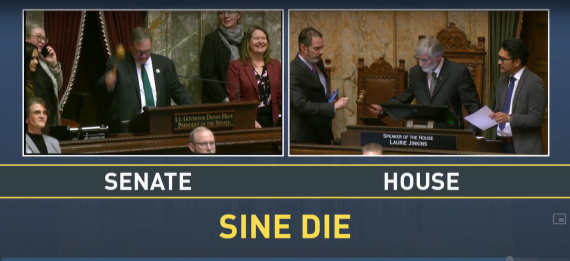
The Washington State Legislature adjourned Sine Die on March 12, bringing a close to a fast-paced 60-day legislative session marked by intense debate over the state budget, tax fairness, and the future of key human services programs.
This short session required lawmakers to address a significant budget shortfall while maintaining essential services for Washingtonians. The final days of session included long floor debates, last-minute negotiations, and even a temporary fire alarm interruption in the Capitol before legislators returned to pass the final budgets and policy bills.
For advocates across Washington, the session brought both challenges and meaningful victories — particularly in efforts to balance our tax system, protect health care access, strengthen community protections, and maintain investments in communities.
A Historic Step Toward Tax Fairness: The Millionaires Tax (SB 6346)
One of the most significant developments this session was the passage of SB 6346 Millionaires Tax. The debate over the Millionaires Tax lasted over 24 hours, setting a record for the longest continuous floor debate in modern Washington legislative history.
The legislation establishes a tax on household income above $1 million per year, expected to generate approximately $3.4 billion annually to support public education, health care, free school meals and human services.
For decades, Washington has had one of the most regressive tax systems in the nation. Supporters argue that asking the wealthiest households to contribute more is an important step toward building a fairer tax structure and sustaining the services our communities rely on.
The bill also expands the Working Families Tax Credit, meaning more than 1.3 million additional Washingtonians will qualify for financial support to help their family make ends meet.
The bill now heads to the Governor’s desk and is expected to face legal and political challenges in the months ahead.
Public Safety Policy WIN: Law Enforcement Leadership Standards (SB 5974)
Another major policy win this session centered on SB 5974. The bill establishes clearer qualification and certification requirements for county sheriffs and police chiefs, strengthening professional standards for individuals serving in these critical leadership roles.
Some county sheriffs and law enforcement organizations are urging the Governor to veto the measure, arguing that it interferes with the authority of elected officials. Faith Action Network is urging the Governor to sign the bill, noting that it strengthens professional standards, accountability, and public trust in law enforcement leadership across Washington.
Budget Negotiations: Protecting Essential Services in a Tight Fiscal Year
Democratic budget writers finalized a supplemental operating budget that updates the $77.8 billion two-year spending plan covering July 1, 2025, through June 30, 2027. The budget is tightly balanced through a combination of one-time measures, a significant withdrawal from the state’s rainy day reserves, and reductions to some programs, including cuts to childcare and early learning funding.
Lawmakers faced a difficult fiscal environment as slowing revenue growth and rising demand for services created an estimated $2–$2.3 billion shortfall. To close the gap while protecting core services, legislators combined targeted spending reductions with the use of state reserves. The plan withdraws approximately $750–$880 million from Washington’s Budget Stabilization Account (“rainy day fund”) while maintaining key investments in K–12 education, healthcare, housing, and behavioral health services that support communities across the state.
Health Care and Human Services
Advocates worked tirelessly throughout the session to protect access to health care and safety-net programs. The final budget includes several important outcomes:
- Apple Health Expansion (AHE) will continue, with funding to add 5,000 additional enrollment spaces for eligible Washingtonians. However, AHE will transition from a managed care to a fee-for-service model beginning in January 2027. Advocates argue the fee-for-service model weakens care coordination and will disproportionately harm people with chronic illnesses and disabilities.
- Proposed cuts to physical, occupational, and speech therapy services for Apple Health adults were not included in the final budget.
- Cascade Care Savings funding was maintained, helping keep health coverage affordable.
- The budget protects food assistance programs for immigrants who may lose SNAP benefits due to federal policy changes.
Advocates also celebrated funding for legislation that ends the practice of garnishing Social Security benefits from youth in extended foster care, correcting a long-standing injustice.
Importantly, no cuts were made to TANF or WorkFirst contracted services, which provide job training and employment support to families experiencing poverty.
More Key Bills Passed This Session
Several important bills also passed during the final weeks of session and now head to the Governor’s desk:
Housing and Homelessness:
HB 1859 — Affordable Housing on Religious Land
Expands opportunities for affordable housing development on property owned by faith communities by allowing density bonuses and regulatory flexibility when at least half of units serve low-income households. This bill empowers faith communities to use their land to address the housing crisis.
HB 2266 — Permanent Supportive Housing
Prevents local governments from blocking permanent supportive housing, emergency shelters, or transitional housing through zoning barriers, helping communities respond more effectively to homelessness.
Worker Protections and Immigrant Rights:
HB 2105 — Immigrant Worker Protection Act
Requires employers to notify workers if federal officials request employment eligibility records and prohibits employers from voluntarily allowing immigration agents into non-public workspaces without a warrant.
Food Security:
HB 2238 — Statewide Food Security Strategy
Directs state agencies to develop a coordinated strategy to combat hunger by improving collaboration between government agencies, local governments, food banks, and agricultural partners.
Law Enforcement Transparency:
SB 5855 — Restrictions on Masking by Law Enforcement Officers
Limits the use of face-concealing masks by law enforcement during routine public interactions to ensure officers remain identifiable and accountable to the communities they serve.
SB 5974 Law Enforcement Leaders Standards
Privacy Protections:
SB 6002 — Automated License Plate Reader Regulations
Creates statewide standards governing how public agencies collect, store, and share data gathered by automated license plate readers, establishing safeguards to prevent misuse of surveillance technology.
Government Accountability:
HB 2156 — Attorney General Investigative Authority
Expands the authority of the Washington State Attorney General’s Office to investigate violations of state law affecting the public interest, strengthening consumer protection and civil rights enforcement.
Clean Energy Implementation:
SB 5982 — Clean Energy Transformation Act (CETA) Utility Planning Updates
Updates planning requirements for utilities as Washington continues implementing its Clean Energy Transformation Act, supporting the transition to clean, reliable electricity while maintaining oversight and accountability.
HB 1903 – Statewide Low-Income Energy Assistance
Establishing a statewide low-income energy assistance program administered by the Washington State Department of Commerce. The program is designed to reduce the energy burden on low-income households by providing direct bill assistance through electric and gas utilities. Beginning in 2026, eligible households will be able to receive ongoing support to help keep their energy bills affordable, particularly during extreme weather and periods of high utility costs.
Additional Legislative Developments
Lawmakers also approved a supplemental capital budget to fund projects across Washington, including:
- School construction
- Housing and homelessness response
- Water infrastructure and flood protection
- Climate-smart agriculture and environmental restoration
Bills That Did Not Advance
Several proposals did not pass before the end of the session, including:
- HB 2515 — Data Centers Energy Policy
- HB 2464 — Reporting Requirements for Detention Centers
- SB 5436 — Places of Worship Interference
- SB 5906 — SAFE Act
Each of these proposals reflects ongoing conversations that will likely return in future legislative sessions.
Continuing the Work
The 2026 legislative session demonstrated both the complexity of governing in a time of economic uncertainty and the power of community advocacy.
Throughout the session, Faith Action Network and our coalition partners worked to ensure that the voices of communities — particularly those most impacted by economic hardship — remained at the center of policy debates.
The work of justice does not end when the legislature adjourns. Faith Action Network will continue organizing, advocating, and speaking out for policies rooted in dignity, fairness, and compassion because every Washingtonian deserves the opportunity to live with security, opportunity, and hope. Together, we will keep building a just and compassionate state! |