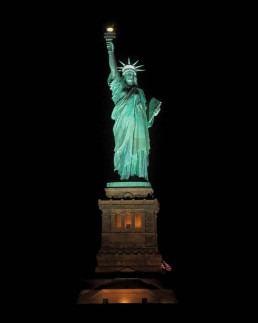
As we approach the celebration of the United States’ 250th anniversary, Faith Action Network extols the religious liberty and vibrant pluralism that we have both inherited and struggled for. This religious liberty is central to democracy and our rights to self-determination. "Religious liberty is not an abstract ideal," writes Anisha Singh of the Legal Aid Justice Center. "[I]t is about whether people, especially those from minority faiths, can move through the world safely and with dignity...” It is about the wisdom and hope that come when people of all faiths and none shape the common good in these United States.
Yet, even as we celebrate, we recognize that this very liberty is threatened. Many, including officials in the White House and Congress, have attempted to paint the upcoming Semiquincentennial as an opportunity to return to America as a “Christian nation.” We see the rise of white Christian Nationalism--a political ideology that fuses American identity with a strict exclusionary interpretation of Christian teachings--in communities across our state and nation and within President Trump's Religious Liberty Commission.
Central to our Constitution, however, is the First Amendment, which affirms religious liberty, as well as the freedom not to adhere to any religion. Let us read it together:
Congress shall make no law respecting an establishment of religion, or prohibiting the free exercise thereof; or abridging the freedom of speech, or of the press; or the right of the people peaceably to assemble, and to petition the government for a redress of grievances.
In his book Out of Many Faiths, Interfaith America leader Eboo Patel quotes President George Washington as he responds to the Jewish leader Moses Seixas about the meaning of this amendment:
"All possess alike liberty of conscience and immunities of citizenship. It is now no more that toleration is spoken of, as if it was by the indulgence of one class of people that another enjoyed the exercise of their inherent natural rights. For happily, the government of the United States, which gives to bigotry no sanction, ... requires only that they who live under its protection, should demean themselves as good citizens."
This religious liberty is crucial to both our spiritual growth and democracy.
In a nation deeply shaped by Christian culture, this Amendment has been affirmed and clarified through many court cases brought by citizens who wanted to protect their rights and those of their neighbors. Rev. Dr. Corey Walker of Wake Forest College reminds us that, "Religious freedom, like American democracy, has never been a settled achievement. It has been and remains a site of struggle over which the very meaning of freedom has been contested and expanded."
We must continue this struggle, especially now. Maggie Siddiqi, Senior Advisor at Interfaith Alliance, offers three ways we can do this:
- Embracing religious pluralism as a value, by seeking to create a society that truly includes people of all religious and nonreligious backgrounds.
- Recognizing that religious pluralism can only thrive through protecting religious liberty, as enshrined in the First Amendment to the U.S. Constitution.
- Acknowledging that true religious liberty is only achieved when all people are free to live outtheir consciences without fear for their safety or well-being.
FAN has heard from so many of our faith community members a growing dismay about this rise of white Christian nationalism and eroding democracy. We are committed now more than ever to acting in solidarity to protect religious liberty and pluralism for everyone. This 4th of July, we encourage all of us to reflect on the role of religious diversity in our democracy.
We recommend the following resources for your reflection and discussion:
|